I was at the 1989 grand final of Australian football.
It is considered by some the greatest game ever played.
Then on Saturday, Brisbane won their third straight premiership after trailing by 17 points with less than five minutes to play. There may be a new contender?
Two teams this century have won three in a row. Brisbane 2001, 2002, 2003 and Hawthorn 2013, 2014, 2015.
When Brisbane did it first, their coach was Leigh Matthews*. He is considered by some the greatest footballer who has ever played.
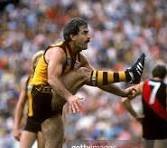
Matthews was a master player, a master coach and an excellent television commentator. Somewhere in the last part of his career he provided a truism that has been repeated many times:
A team is not out of it if the number of goals left to win is less than the number of minutes left to play.
On Saturday at the MCG, Fremantle led by 17 points with four minutes-plus left to play. No one at Fremantle knows who Leigh Matthews is. Brisbane kicked four goals in those four-nearly five minutes to win by seven points.
In 1989, Hawthorn led Geelong by more than six goals at three-quarter time. They had led by this margin at every change. The game was different then. It was brutish.
When the umpire bounced the ball to begin the match, Geelong’s Mark Yeates charged from his position to flatten Dermot Brereton, when he was not even close to the ball. Hawthorn’s champion centre half-forward had been cowardly felled by a legitimate hip and shoulder. It punctured his lung.
Brereton refused to leave the field. He struggled as trainers led him closer to goal. The club doctor attended and said the player was grey. He had to leave to field. Brereton again refused.
Geelong kicked a goal and in the next passage of play as burly Hawthorn wingman Robert Dipierdomenico was in his position and fighting (yes fighting!) three Geelong opponents the ball went into his team’s forward line. Brereton led, then had to back back as the ball was going over his head. Without knowing a thing about what was coming behind – and teammate and foe were charging – he marked. He goaled from a long way out.
It was the most courageous thing I have seen in 60-plus years of watching sport. Sitting in front of me was Alan Joyce, who was caretaker coach of Hawthorn when they won the previous year’s grand final (regular mentor, Allan Jeans, was sick). Joyce may be the most dour man to ever front a football team. Intelligent, tactical. Sure. Demonstrative? No. He leapt from his seat and pumped the air when Brereton’s kick went through.
My companions and I had seen something remarkable and there was no greater selling of it than Joyce’s reaction.
The game kept on this trajectory. Huge clashes, spot fire fights but Hawthorn was inspired and kept about six straight kicks ahead.
It may sound strange to read that a full-back who has allowed his opponent six goals to three-quarter time, had done a good job but such was the case because of that opponent’s quality. Hawthorn full-back Kelvin Moore had done really well but he was playing on Gary Ablett. Not his son with the same first name who was also a champion, this was GARY ABLETT. He kicked another three but Hawthorn lasted to win by six points. Had the game gone another two minutes …. had the game gone another minute, they probably would have lost. Hell, I’m sure they would have lost.
Ablett won the Norm Smith Medal.
On Saturday the losing team’s Shai Bolton won the medal. He had played really well but games are won by heroic efforts of individuals. Brisbane’s Will Ashcroft had a good game, not his usual dominance when firing, but good. In the four-plus minutes left, he won the clearances – statistically dominated all match by Fremantle – and drove the ball forward. He lifted Brisbane to those four late goals.
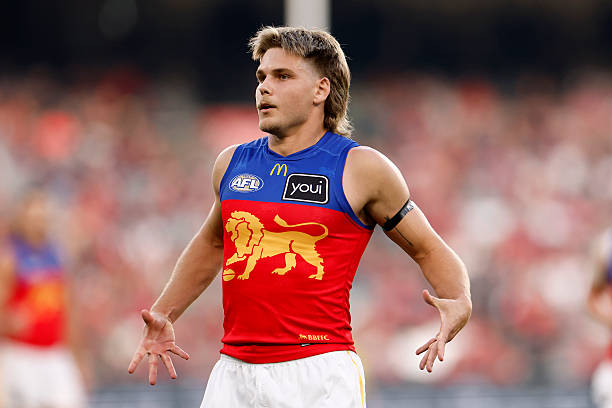
l am a great believer in assessing things from a whole-game perspective. The poor bloke who misses a goal in the last minute is remembered. Does any fan remember the two-or-three “sitters” missed by their team in the first 10 minutes of play? It didn’t happen Saturday, but it happens.
In a game where no individual really stood out, a match-winning five minutes like Ashcroft’s deserved the individual reward of the Norm Smith.
And something, I haven’t heard anyone say. The loss of Fremantle captain Alex Pearce was crucial. That’s obvious. But how crucial? How many times has Pearce left his opponent and effected a spoil? How many times has Pearce won a one-on-one in the dying minutes?
Logan Morris, who is an excellent player, but had a poor finals series (except for his last five minutes on Saturday) was well beaten. Then he kicked the last two goals. No Pearce.
Earlier, I wrote the game has changed since that 1989 match. One thing that didn’t happen in 1989 was US-style gimmickry.
“Wharfie Time” has become of great interest to fans but it doesn’t belong at a grand final. It doesn’t belong at the MCG. It should be a home-town thing like Port Power fans singing their theme and Brisbane’s songs played when individuals kick goals. The AFL erred in letting it happen. Fremantle erred in using it. They certainly erred in using it when they did.
As an aside, who had the foresight to make the Melbourne Cricket Ground a 100,000-plus audience capacity venue in the 1950s? My father used to say that you “could hold a flower show at the MCG and 80,000 would turn up.” The city loves sport. They love the G.
On Saturday, more than 100,000 people sat in the arena and saw sport at its best.
____________________________________________________________________________________
*Leigh Matthews won four grand finals as a player at Hawthorn. He won four grand finals as a coach (Collingwood 1990, Brisbane 2002, 2003, 2004).
He kicked 915 goals in 332 games, playing as a rover (midfielder in today’s terms) and a resting small forward. He ranks ninth on the VFL/AFL goal kicking list and is the only one who wasn’t a full-forward. Kevin Bartlett of Richmond (778 goals) is the only other non full-forward in the top 30.
Matthews won Hawthorn’s fairest-and-best eight times, in a team which won four grand finals.
27 September 2026

