Have you ever wondered how film makers get cities to close off major streets to put a car chase on camera? Or have two of the most recognised people in the world stroll alone in front of a monument or building which usually attracts thousands of people a day?
Well imagine filming a feature length thriller in secret, all the while knowing that you and your skeleton crew could be imprisoned if it’s discovered what you’re up to?
Iranian director Jafer Panahi pulled this off and the result, It Was Just an Accident (2025), won him a Palme d’Or at the 2025 Cannes Film Festival, other plaudits in the US and is up for Oscars in two categories (International Feature Film and Original Screenplay) at next month’s Academy Awards.
During filming, security forces interrupted the crew and Panahi suspended shooting for three weeks while awaiting any adverse outcome.
Since making the movie, Panahi has been sentenced in absentia to one year in prison in his native Iran. Though anti the Iranian regime, It Was Just an Accident to my mind, is an even-handed look at the once great Persian land.
Panahi echoed this I believe in his acceptance speech at Cannes last May: “Let’s set aside our differences. The important thing now is the freedom of our country, so that no one would dare to tell us what to wear or what film to make.”
Sounds reasonable to me but then I’m not a high ranking member of the Twelver Shia clergy.
The moral tale of It Was Just an Accident involves the thirst for revenge and the realisation that to eke out that revenge makes you as bad as those who have hurt you.
The film opens with a close up of two people in a car driving at night. The mind sprang to Once Upon a Time in Anatolia (2011) as a car full of investigators and a murder suspect head through Turkey towards where the victim lays.
The driver in Accident appears assured and loving towards his heavily-pregnant wife and young daughter who appears in shot after a conversation has ensued between the married couple. Cars are travelling the opposite direction and barking dog sounds are prevalent. At one point a pack of dogs is seen chasing a fast-moving car.
Without seeing anything but the driver’s actions during and after, the car hits another dog and it has to be taken from the road. The daughter (Delmaz Najafi) is upset by this but assured by her mother (Afssaneh Najmabadi) that her father couldn’t help it. As the film progresses, one wonders if this perfectly reasonable summation is a metaphor for her excusing the work he does as a security agent for the government?
When their car breaks down, they are directed to a garage where one of the workers, Vahid (Vahid Moddasseri), is upstairs and out of sight when the family moves through the ground floor – the women to use the toilet, the man to get tools to assist the repairs.
It is here Vahid breaks from a genial conversation with his mother when he hears a squeaking sound as the man walks through his workshop. The distinct sound emanates from the man’s gait and panics Vahid. It is the same sound he recalls being made by his torturer when imprisoned the previous year for protesting.
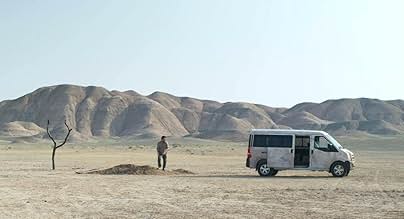
From here ensues a dark tale with some very black comic moments. Vahid kidnaps the driver, Eghbal (Ebrahim Azizi) and digs a grave for him in the desert. However, even though the man is an amputee like his torturer, Vahid becomes slightly uncertain. He enlists the help of other victims but while they are nearly sure, cannot certainly identify the prisoner. The other victims are Shiva (Mariam Afshavi), a photographer filming pre-wedding shots of Golrokh (Hadis Pakbaten) and her future groom (Majid Panahi).
The women’s stories of atrocities committed while in prison are harrowing and even the groom, who was not in jail, has suffered because Golrokh has had the stigma of untrue allegations of collaboration against her. Not until Shiva’s ex-lover Hamid (Mohamed Ali Elyasmehr) is brought into the cabal, is identification confirmed. But by now, those willing to kill Eghbal are softening.
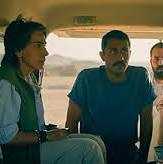
Conflict, narrow escapes and the revelation that everything in Iran requires more than the cost price occur. Even the petrol station attendant negotiates with Vahid about the price of a tank of fuel, way above that advertised.
Scenes of verbal conflict between the group are shot next to the van at various city locations. These are tightly grouped and quick to accommodate the secrecy of filming. Moments shot in less urban locations often feature the distant lights of the city. Is this illumination a beacon of hope for the Iran Panahi desires?
When Eghbal’s daughter tries to contact her father and the kidnappers answer his mobile phone, this strikes home even further. The girl’s mother has passed out with her waters broken and the child is alone.
The group take the two women to hospital, a son is born and they even buy traditional pastries for the staff, as well as stumping up for the “sling” the hospital expects.
Near film’s end, Eghbal is tied to a tree begging for his freedom while Shiva delivers a chilling interrogation, repeating his crimes against her and others. When he confesses they drive away, leaving him means to escape.
The conclusion is dramatic and I will leave viewers to make their own interpretation of its meaning.
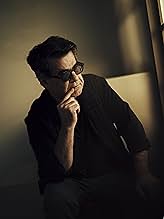
Director Jafer Panahi
FOOTNOTE
At the New York Film Festival in September-October last year, Martin Scorsese interviewed Panahi through an interpreter. Panahi gave a hint as to where his passion for film making began.
When his father – “a worker and son of a peasant” – died at 53 after a stroke, Panahi recalled the man’s words: “You’re not allowed to bow to anyone but God.”
He then added “I didn’t find God in the skies. I found God in images.”
In It Was Just an Accident, Panahi has shown through his images that no one can tell him what kind of film to make.
4
 I WRIGHT