It is rare when I don’t agree with my filmgoing friends about the merits of a movie.
These occasions are more on the side of my like for a film and the Film Club accepting it with average to good scores.
Infamously, Still Alice (2014) and Looking For Grace (2015) were examples where my complete distaste for the previous two hours I endured watching each was moderated with my companions giving the films a strong tick.
Not as comparable in terms of disgust vs acceptance, Wicked Little Letters (2023) was a watershed in terms of me being so widely the odd person out in terms of enjoyment.
While my friends gave scores ranging from a perfect 5 to 3.5 – almost a distinction from all six viewers – my rating was a pass mark at 2.5.
On more careful reflection, you do have to say that Wicked Little Letters had superb lead actors – Olivia Coleman, Jessie Buckley and Timothy Spall at their best – and was an interesting little crime story that kept the viewer interested until its end.
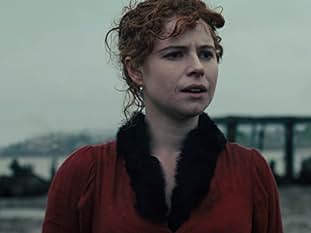
But it looked like television. And television has grown so strongly in the past 20 years (The Sopranos, The Wire, Breaking Bad, Peaky Blinders, Game of Thrones, After Life et al).
It continues to do so with streaming channels bringing future classics to our home screens amid an avalanche of dross. One expects more when going to the cinema and Wicked Little Letters played like old television.
Edith Swan (Colman) lives with her parents, Edward (Spall) and Victoria (Gemma Jones) in a seaside community in England. Next door lives Rose Gooding (Buckley), her child Nancy (Alisha Weir) and boyfriend Bill (Malachi Kirby).
Edith is a God-fearing (and father-fearing) spinster while Rose is a tart. Loudly profane, heavy-drinking and sexually liberated. Attempts at friendship between the two go well until Rose asserts herself at Edward’s birthday party and, when social services arrive the following day, the friendship is finished.
Edith begins receiving letters written with such bold and blue language that it is hard to believe the story is set in 1920. The family suspect Rose and so do many in the community who find out about it.
We are told this in flashback and the viewer is shown the status of women in this era. Hard to believe but this is England and they didn’t even have a vote unless they were over 30 and held property and that had come only two years before.
Men dominate. Female suffrage of all women aged 21 or over (Equal Franchise Act, 1928) was eight years away. Investigating male police are shown for their bigotry towards women and Woman Police Officer Gladys Moss (“Why do you keep calling yourself Woman Police Officer when it’s obvious you’re a woman,” Rose tells her) is treated as a curiosity in her own station.
Moss (Anjana Vasan) doesn’t believe Rose wrote the letters and, after being suspended from her constabulary role for disobedience, teams up with local characters Ann (Joanna Scanlon), Mabel (Eileen Atkins) and Kate (Lolly Adefope) to find the truth.
As this trio are all regular card-playing companions of Edith, it becomes obvious the poor woman isn’t as contrite a Christian and as popular as she has everyone believe.
Who is the villain? The story plays out well with lots of profanity spoken from unlikely mouths and lots of humour in a sort of The Darling Buds of May kind of way.
Spall, as the domineering father, is excellent and makes us dislike his complete power complex while living what appears a very mediocre life.
Colman is, as usual, superb.
But Buckley does more than make up the numbers beside these two highly-acclaimed actors. (Her brief biography follows. She is very accomplished)
In the 2020 version of the made-for-TV Fargo, Buckley played a nurse, Oraetta Mayflower, who poisons her patients with home-made cakes. It was a magnificent portrayal of a psychotic killer dressed up as “the kind lady over-the-road”.
She has been nominated for an Oscar (The Lost Daughter) and won a Laurence Olivier award for Best Actress in a Musical for a stage production of Cabaret (2021).
This great cast, including the excellent support from some well-known faces and talented newcomers, does well with a script that had those around me in hysterics. I felt rather the party-pooper but to me it was only mildly amusing.
2.5
______________________________________________________________________________________
APOLOGIA: For over-use of the words “I” and “me” but this review was based as much around the different view from my fellow club companions as to the merits of this film.
FOOTNOTE: On inspection I gave Still Alice 1.5 and Looking For Grace 1.0. They weren’t the worst films this club has seen but I didn’t have the time to go through every score and they just happen to always be on my radar.
JESSIE BUCKLEY, OTHER THAN FILM AND TV
- Jessie Buckley is an Irish singer and actress, who came in second place in the BBC talent show-themed television series I’d Do Anything, and subsequently played Anne Egermann in the West End revival of Stephen Sondheim’s A Little Night Music. Most recently, Buckley played Lyudmilla Ignatenko in the HBO drama miniseries, Chernobyl. She also appeared on three BBC television series, as Marya Bolkonskaya in BBC’s adaptation of Leo Tolstoy’s War and Peace, as Lorna Bow in Taboo and as Honor Martin in The Last Post.
- Buckley was born in Killarney, County Kerry, the eldest of five children. Her mother, Marina Cassidy, encouraged her to sing and coached her. She has a brother and three sisters. Buckley went to Ursuline Secondary School, an all-girls convent school in Thurles, County Tipperary, where her mother works as a vocal coach and where she performed in school productions. She played a number of male roles at school, including the male lead role of Jets gang founder Tony in the musical West Side Story and Freddie Trumper in Chess.
- She has achieved Grade eight in piano, clarinet and harp with the Royal Irish Academy of Music. She is also a member of the Tipperary Millennium Orchestra. Buckley also attended The Association of Irish Musical Societies (AIMS) workshops during the summer, to help improve her singing and acting; it was where she was then recognized as a talented actress and was encouraged to apply for Drama School in London. Just before she auditioned for I’d Do Anything, she was turned down by two drama schools, including one the day before her first audition for the show. In 2008, Buckley won the AIMS Best Actress award for her portrayal of Julie Jordan in the Killarney Musical Society production of Carousel.
 I WRIGHT